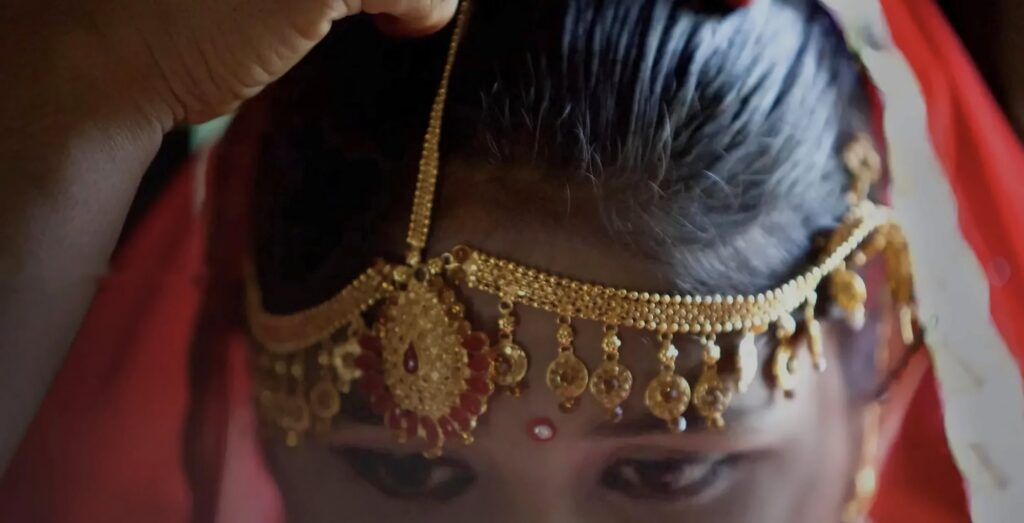
The abduction, forced conversion, and child marriage of minority girls in Pakistan reflect a failure of state institutions to protect children and uphold the rule of law. This institutional weakness, combined with authorities’ reluctance to confront influential religio-political groups, emboldens perpetrators and perpetuates these abuses.
Recently, Senators from the Minority Caucus expressed serious concern over the alleged involvement of influential religious figures in facilitating the forced conversion of minority girls. They took notice of the case of 14-year-old Bindiya Kumari, a ninth-grade student allegedly abducted by Yasir Domki in Sibi, Balochistan, and taken to Sindh. Senators directed the Deputy Inspectors General of Police in Sindh and Balochistan to recover Bindiya and prosecute Mian Abdul Haq, alias Mian Mithu, associated with Barchundi Sharif Dargah in Ghotki.
Forced conversions and child marriages are not confined to Sindh; they are also reported in Punjab, where minority girls continue to face human rights violations, and their families struggle to obtain justice. A 14-year-old Sataish Mariam from Chichawatni, a 13-year-old Mariam Asif from Vehari, and Heeri Mai from Rahim Yar Khan were abducted in January, April, and May 2026, respectively. These Hindu and Christian girls have yet to be recovered, and their alleged abductors remain at large.
The persistence of these incidents raises a fundamental question: why do laws and institutions mandated to safeguard citizens so often fail when the victims belong to religious minorities? The answer lies partly in the political influence exerted by groups that invoke religion to obstruct legal reforms.
In late October 2026, federal ministers Khawaja Asif and Mohsin Naqvi acknowledged in Parliament that successive governments had faced blackmail from religious-political groups exploiting religion for their own interests. Their admission underscores a longstanding problem: the state’s reluctance to resist pressure from influential groups has repeatedly undermined efforts to protect vulnerable communities.
For many years, religio-political groups have opposed Child Marriage Restraint laws establishing 18 as the minimum age for marriage, arguing that such provisions contradict Islamic principles. Yet the Federal Shariat Court, in Shariat Petition No. 10/I of 2020 and Shariat Petition No. 05/I of 2022, held that the state may prescribe a minimum marriage age and that doing so is not contrary to the injunctions of Islam as laid down in the Holy Quran and Sunnah.
Despite the court’s rulings, these influential groups continue to obstruct progressive laws intended to protect children and women from exploitation and abuse. Their regressive position also raises concerns about the authority of Parliament to legislate in the public interest and the ability of the judiciary to ensure that its rulings are respected.
Pakistan still lacks a specific criminal law comprehensively addressing coerced faith conversion. Efforts to introduce such legislation have repeatedly encountered resistance from influential religious and political factions. The parliamentary committee declined to advance the Prohibition of Forced Conversions Bill, 2021 following objections from religious-political groups and government bodies, including the Ministry of Religious Affairs and the Council of Islamic Ideology. Among the disputed provisions were those concerning the minimum age and legal procedures for conversion. These influential groups argued that the proposed legislation conflicted with religious principles and could infringe upon Muslims’ right to religious freedom to convert non-Muslims to Islam. This argument is contested, as the freedom to adopt or propagate a religion cannot reasonably be interpreted as a licence to abduct, threaten, or otherwise coerce another person, particularly children, into changing their faith.
Even where legal protections exist, their implementation remains deeply flawed. Across Pakistan, laws against child abuse and gender-based violence have been strengthened, yet enforcement is undermined by weak investigations, institutional reluctance, and inconsistent judicial interpretation. Police officers often appear unwilling to pursue cases involving perpetrators backed by influential figures, while courts do not always give sufficient weight to statutory safeguards and documentary evidence.
In F.C.P.L.A. No. 536/2025, the Federal Constitutional Court awarded custody of a 13-year-old Maria Shahbaz to her abductor and purported husband, reportedly disregarding documentary evidence of her age and relying instead on her physical appearance. The court further held that although child marriage constitutes a criminal offence, the marriage itself would remain legally valid. This reasoning risks undermining child-protection laws by allowing a marriage to retain legal validity despite the criminality of its solemnisation.
Flawed investigations, inconsistent application of the law, and judicial decisions that undermine statutory protections erode public confidence in the justice system. For vulnerable groups, these failures reinforce the perception that equal protection under the law remains an unfulfilled promise rather than a fundamental right.
In recent years, the government has launched operations against extremist and terrorist elements exploiting religion to advance their agendas. The same resolve must be demonstrated in protecting citizens from coercion and abuse by influential groups. Neither religious identity nor political influence should place anyone above the law or beyond its reach.
The responsibility for ending forced conversions and child marriage rests with multiple institutions. Federal and provincial governments must enact comprehensive legislation that clearly criminalises coerced religious conversion and establishes effective penalties for perpetrators and accomplices. Police must register complaints promptly, invoke all relevant provisions of the Pakistan Penal Code, including Sections 361, 363, 364-A, and 498-B, where applicable, and conduct impartial investigations without intimidation or favour. Courts must uphold constitutional guarantees of equality, liberty, and fair trial, while ensuring that religious or personal-law interpretations do not negate statutory child-protection standards or discriminate against minority communities.
Ultimately, the test of a state’s commitment to justice is not how it protects the powerful, but how it safeguards those most exposed to abuse.
Shazia George is a human rights professional and former member of the Punjab Commission on the Status of Women (PCSW). This article first appeared on VoicePK.net.
This article was originally published by VoicePK on November 6, 2026 and is reprinted here with the author’s permission.
Editor’s note: In October of 2026, a high court ordered that a police investigation be reopened in the Maria Shahbaz case.
Further reading: United States Commission on International Religious Freedom (USCIRF) 2026 Country Brief on Pakistan